
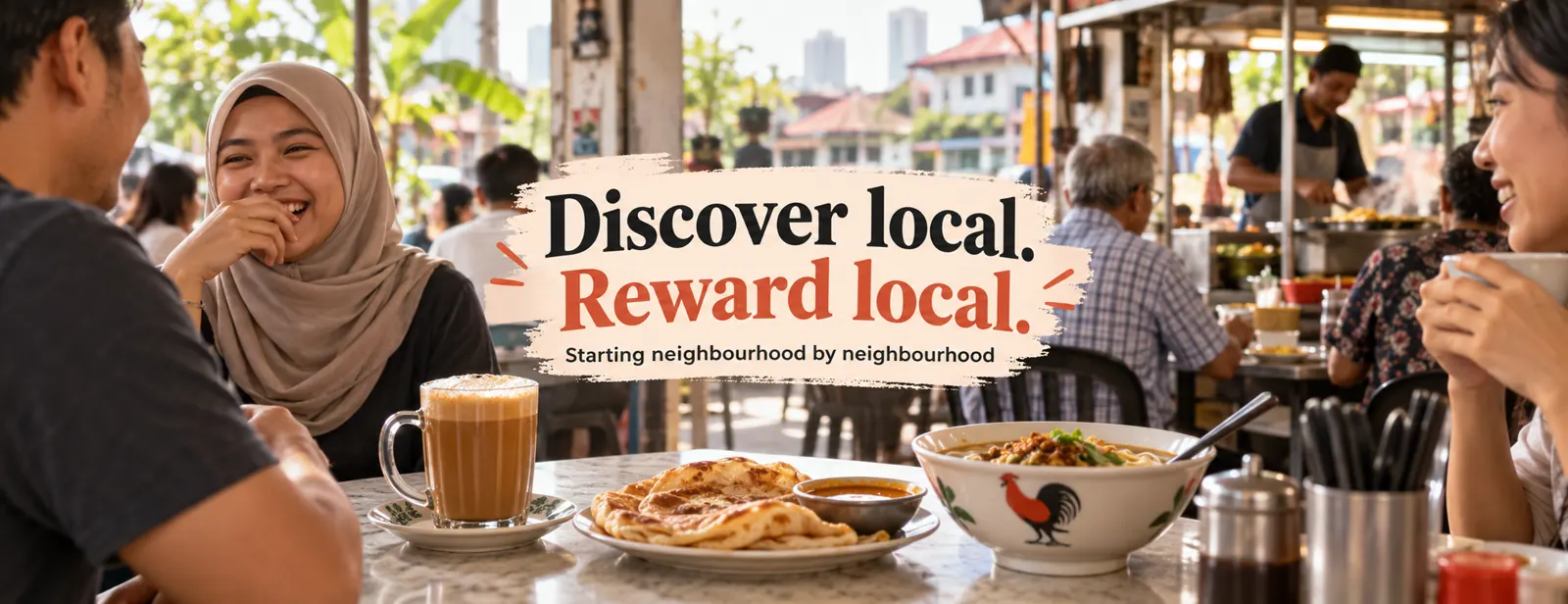
Makan Like a Local
Many cultures. Many flavours. One shared love of food.
A Malaysian food journey might begin with breakfast at a kopitiam, continue with lunch at a neighbourhood stall and end with dinner shared around a table. Customs vary between communities and individual businesses. This guide offers practical tips, not rules for every Malaysian table. When unsure, a friendly question is a good place to start.
Find your kind of makan place
Explore kopitiams, mamaks, warungs, food courts, independent stalls and restaurants. A shared venue may contain several separately operated businesses. Look for the stall name as well as the venue name so you can find the same cook again.
Check where to order and pay
At some kopitiams and food courts, food and drinks are ordered from different operators and paid for separately. Other places use a central counter or QR menu. Ask where to order, whether to give your table number, and whether payment is due when ordering or after eating.
A few useful Malay phrases
“Makan sini” means eat here; “bungkus” means takeaway. “Kurang manis” asks for less sweet; “tak pedas” asks for not spicy. “Terima kasih” means thank you. Requests depend on what the business can prepare. For allergies, explain the ingredient clearly and confirm with staff rather than relying on a short phrase.
Understand food suitability
Read the information for the specific outlet or stall. “Pork-free” and “Muslim-friendly” descriptions do not establish halal certification. Check official Malaysian halal certification through JAKIM’s directory when relevant, and ask about ingredients and preparation. Vegetarian food is not automatically vegan or suitable for every allergy.
Share with consideration
Ask before taking an empty seat at an occupied table. Use serving utensils for shared dishes when available. Some Malay and Indian dining traditions favour the right hand when eating by hand; wash your hands first and follow your host’s guidance. Cutlery is fine to request. Respect the needs and customs of your dining companions.
Pay clearly and leave thoughtfully
Check accepted payment methods before ordering if you depend on a particular one. Confirm which stall or counter should receive payment and check the bill. During busy periods, avoid occupying a table long after finishing when others are waiting. Follow the venue’s tray-return or clearing instructions.
Support the people behind the food
Ask before photographing staff or other diners. Share discoveries accurately and offer constructive feedback. A small stall may have limited hands during a rush; a little patience helps. Supporting local food can be as simple as returning, bringing a friend or telling someone about a meal you enjoyed.